


Stop Fuel Leaks at the Source With a Better Drain Plug
A small plug can create a big problem.
When a fuel tank drain plug is worn, stripped, cracked, cross-threaded, or sealed with the wrong gasket, fuel can seep slowly, drip steadily, or appear suddenly after refueling. That means odor, waste, downtime, safety concerns, and the nagging question every equipment owner wants answered quickly: “What part do I need, and will it actually stop the leak?”
Our Fuel Drain Plug is built for one purpose: to help create a clean, dependable seal at the fuel tank drain point so you can get back to work with confidence. Whether you are replacing a damaged plug, servicing a tank, or resolving a recurring leak, this product provides a practical path to a smarter fuel leak fix without guesswork. Browse the Best info about Fuel Drain Plug.
Stop Fuel Leaks at the Source With a Better Drain Plug
A small plug can create a big problem.
When a fuel tank drain plug is worn, stripped, cracked, cross-threaded, or sealed with the wrong gasket, fuel can seep slowly, drip steadily, or appear suddenly after refueling. That means odor, waste, downtime, safety concerns, and the nagging question every equipment owner wants answered quickly: “What part do I need, and will it actually stop the leak?”
Our Fuel Drain Plug is built for one purpose: to help create a clean, dependable seal at the fuel tank drain point so you can get back to work with confidence. Whether you are replacing a damaged plug, servicing a tank, or resolving a recurring leak, this product provides a practical path to a smarter fuel leak fix without guesswork.
A Simple Replacement Part That Solves a Frustrating Problem
Fuel leaks rarely arrive at a convenient time. You may notice a damp spot under a parked vehicle, a fuel odour near a machine, residue around the tank fitting, or a drip that worsens with vibration and use. In many cases, the source is not the whole tank. It may be the drain plug assembly: the plug, the sealing surface, the threads, or the gasket.
This replacement fuel drain plug is designed for buyers who need a dependable drain-point seal and a clear selection process. Instead of forcing you to sort through confusing options, the product is offered with fitment-focused choices such as thread size, sealing style, and compatible gasket options where applicable.
Use it when you need to:
- Replace a missing, damaged, or worn fuel tank drain plug
- Address a slow fuel seep at the drain point
- Restore a cleaner seal after tank draining or maintenance
- Eliminate unreliable temporary fixes
- Keep a spare plug ready for preventive maintenance
- Support safer, cleaner service on vehicles, generators, equipment, small engines, tanks, or machinery where compatible
If the fuel is leaking from the drain plug area, this is often the most direct part to inspect first.
Why the Right Plug Matters
A fuel drain plug is not just a threaded piece of metal. It is a sealing component. It must match the tank fitting, engage the threads correctly, compress the sealing washer or gasket properly, and resist exposure to fuel, vibration, temperature changes, and routine service.
Choosing the wrong plug can cause new problems:
- Threads may not seat properly
- The plug may tighten before the gasket seals
- A soft or incompatible washer may swell, crack, or flatten
- Over-tightening may damage the tank fitting
- The leak may continue even after replacement
- A temporary sealant may mask the problem rather than fix it
Choosing the correct Fuel Drain Plug helps you avoid the cycle of “tighten it again, wipe it again, check it again.” The goal is a secure fit, a reliable seal, and a cleaner maintenance experience.
Product Overview
This fuel tank drain plug is a replacement sealing component for compatible fuel tanks, equipment tanks, and drain fittings. It is available in common configurations to support a wide range of applications. Because tank designs vary, fitment should be confirmed before purchase by checking the existing plug, tank thread, sealing surface, and gasket style.
Built for Practical Use
The design focuses on the details that matter during real-world service:
- Secure thread engagement to help the plug seat correctly
- Fuel-compatible sealing options where a gasket or washer is required
- Durable construction suitable for routine tank draining and replacement service
- Low-profile, service-friendly form for easier installation and removal where access is limited
- Clean sealing surface to help reduce seepage when properly matched and installed
- Multiple size options to support different tank fittings
This is not a “universal magic plug” that ignores fitment. It is a purpose-built replacement part that works best when matched correctly to your tank.
Made for the Buyer Who Wants the Leak Gone
You do not need a lecture. You need a part that fits.
This product page is here to help you make the right decision before you buy. If you are searching for a fuel leak fix, you are probably trying to determine whether the drain plug is the problem, what replacement style you need, and how to avoid buying the wrong size.
Here is the plain answer: if the leak is coming from the fuel tank drain point and the tank body is not cracked, replacing the plug and seal may solve the issue. The key is choosing a fuel drain plug that matches the thread, sealing method, and fuel type requirements of your application.
Key Benefits
Helps Stop Drain-Point Fuel Leaks
A properly matched fuel tank drain plug helps seal the tank drain opening and reduce leakage at the plug. If your current plug is worn, damaged, corroded, or paired with a failing gasket, replacement may be the fastest and cleanest solution.
Supports Safer Maintenance
Fuel leaks can create odor, staining, fire risk, environmental mess, and unnecessary downtime. Replacing a suspect plug supports a safer maintenance routine and helps keep the tank area cleaner.
Better Than Temporary Patchwork
Thread tape, random sealant, mismatched bolts, and improvised washers may appear to work for a moment, but they can cause fitment issues or complicate future service. A correct Fuel Drain Plug is the cleaner, more professional answer.
Designed for Repeat Service
Drain plugs often need to be removed and reinstalled during tank cleaning, fuel changes, inspection, and maintenance. A serviceable replacement plug gives you a better foundation for future work.
Helps Protect the Tank Fitting
The right plug should thread in smoothly and seal without excessive force. This helps reduce the risk of damaging the tank fitting through over-tightening or cross-threading.
Easy to Keep on Hand
If your equipment cannot afford downtime, keeping a spare drain plug and compatible seal is a smart move. A small part can prevent a large delay.
When to Replace Your Fuel Tank Drain Plug
Fuel drain plugs are often overlooked until they fail. Replacing the plug is worth considering when you see one or more of these warning signs:
- Fuel residue around the drain opening
- A visible drip from the plug area
- Fuel odor near the tank after parking or storage
- A plug that spins, slips, or does not tighten securely
- Damaged, flattened, cracked, or missing sealing washer
- Rust, corrosion, or deformation on the plug
- Thread damage from over-tightening or past repairs
- Leaks that return after wiping the area clean
- Plug removed during service and not sealing well afterward
- Evidence that a non-original bolt or incorrect plug was installed
If the plug area stays dry after cleaning and inspection, the leak may be coming from another source. If the wettest point is directly at the drain plug or washer, replacing the plug and seal is a logical next step.
How to Know If This Product Is Right for Your Application
A fuel drain plug must match your tank. Before ordering, check the details below. If you are not sure, remove the existing plug only when the tank can be safely drained and the work area is properly prepared.
1. Confirm the Leak Location
Clean the area around the drain plug and inspect it carefully. Fuel can travel along seams, brackets, or the bottom of the tank, which may make the leak appear to come from the plug when the actual source is elsewhere.
Look for the highest wet point. If the residue begins at the plug, gasket, or drain boss, the plug assembly is likely involved.
2. Match the Thread Size
Thread size matters. A plug that looks close may still be wrong. Compare the existing plug to the replacement option or measure the tank fitting carefully.
You may need to verify:
- Thread diameter
- Thread pitch
- Straight or tapered thread design
- Overall plug length
- Head style and tool clearance
- Whether the plug bottoms out before the washer seals
If the plug does not thread in smoothly by hand for the first turns, stop. Forcing the plug can damage the tank fitting.
3. Identify the Sealing Method
Different drain plugs seal in different ways. Some use a washer, some use an O-ring, some rely on a tapered thread, and some use a machined sealing face.
Common sealing styles include:
- Flat washer seal
- Crush washer seal
- O-ring seal
- Tapered thread seal
- Integrated gasket seal
Choose the replacement style that matches the original design unless a verified upgrade is available for your exact application.
4. Check Fuel Compatibility
The sealing material should be appropriate for the fuel being stored. Gasoline, diesel, ethanol blends, biodiesel blends, and other fuels may interact differently with sealing materials. When in doubt, select a plug and gasket option intended for fuel-system use.
5. Inspect the Tank Fitting
Even the best Fuel Drain Plug cannot fully compensate for a cracked tank, stripped boss, deeply gouged sealing surface, or severely damaged threads. Inspect the fitting before installation.
If the tank fitting is damaged, you may need repair beyond plug replacement.
Product Features
Precision-Focused Fit Options
A drain plug works only when it fits correctly. This product is offered in fitment-focused variants so you can select the configuration that matches your application. Choose by size, sealing style, and, where available, compatible washer or gasket option.
Fuel-Resistant Sealing Support
For plug styles that require a washer, gasket, or O-ring, compatible sealing options are available to help reduce seepage at the drain point. Replacing the seal along with the plug is often recommended when addressing a fuel leak.
Durable Construction
The plug body is designed for routine service and tightening when installed in accordance with the application requirements. Select material and finish options may vary by size or configuration.
Clean Installation Profile
The head design is intended to support practical installation and removal with the appropriate tool. This helps during tank draining, inspection, winterization, fuel changes, and maintenance.
Service Replacement Ready
Use it as a direct replacement when the existing drain plug is damaged or as a preventive spare for maintenance kits, shop inventory, fleet service, or equipment support.
Suitable for Many Fuel Tank Applications
This replacement plug may be used in compatible tanks for vehicles, machinery, generators, small engines, agricultural equipment, marine-related equipment, storage systems, or specialty applications. Always confirm fitment and fuel compatibility before purchase.
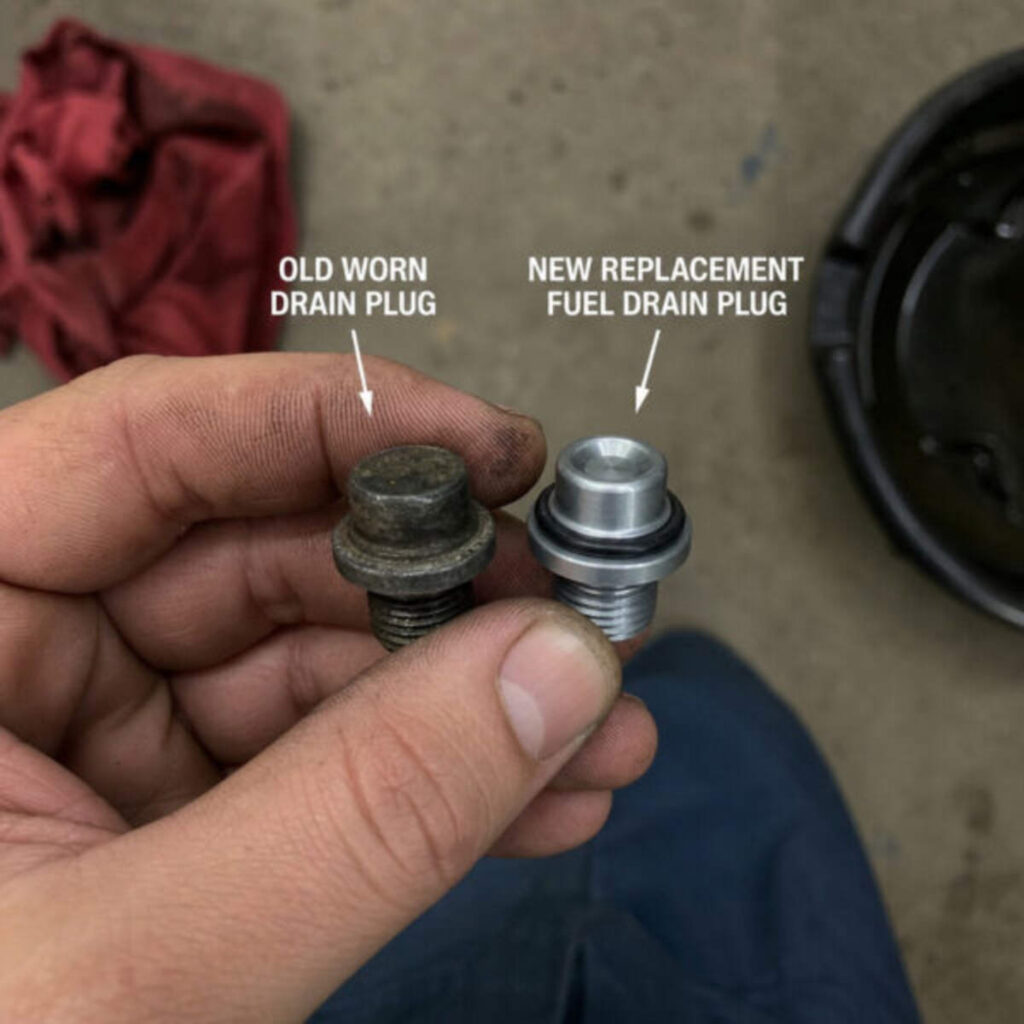
What Makes a Good Fuel Drain Plug?
Not every plug that threads in is the right plug. A good fuel drain plug should do five things well.
It Should Fit the Threads Correctly
Correct thread fit is the foundation. If the plug is too loose, too tight, mismatched, or forced into place, the seal may fail. The correct plug should begin threading by hand and seat consistently.
It Should Seal at the Right Surface
Some plugs seal under the head. Some seal on the threads. Some use an O-ring groove. If the sealing method does not match the tank design, fuel may escape even when the plug feels tight.
It Should Use the Correct Gasket or Washer
A worn washer is one of the most common reasons a drain plug leaks after service. If the plug is removed, inspect the washer. If it is crushed, hardened, swollen, cracked, or missing, replace it.
It Should Resist Fuel Exposure
The plug and seal should be suitable for fuel contact. Materials not intended for fuel service can degrade and create recurring leaks.
It Should Be Serviceable
A drain plug is a maintenance part. It should be easy enough to remove with the proper tool and durable enough for normal service intervals. A plug that rounds off easily or corrodes quickly can turn a simple job into a difficult repair.
Common Causes of Fuel Leaks at the Drain Plug
A leak at the drain point may happen for several reasons. Understanding the cause helps you choose the right replacement and avoid recurring issues.
Worn Sealing Washer
A washer can flatten over time and lose its ability to compress. Once that happens, tightening the plug may not solve the leak. Replacing both the washer and plug can restore the seal.
Incorrect Plug Installed
A previous owner, operator, or technician may have installed a plug that was “close enough.” It may appear to fit but leak under vibration, pressure changes, or temperature shifts.
Cross-Threading
If the plug was installed at an angle, the threads may be damaged. A cross-threaded plug often feels tight before it is actually seated.
Over-Tightening
More force is not always better. Over-tightening can crush washers beyond their intended range, deform sealing surfaces, strip threads, or crack fittings.
Corrosion or Surface Damage
Rust, pitting, scratches, and debris on the sealing surface can create a leak path. Clean the area before installing the replacement plug.
Missing or Wrong Sealant
Some tapered thread plugs may require a fuel-compatible thread sealant, while washer-style plugs typically seal at the washer. Using the wrong sealing method can cause leaks.
Tank Damage
If the tank boss is cracked or the surrounding metal or plastic is compromised, a new plug may not be enough. Inspect carefully before assuming the plug is the only problem.
How This Product Helps With a Fuel Leak Fix
When buyers search for a fuel leak fix, they often want a quick answer. But the best fix is not always the fastest-looking one. The best fix is the one that addresses the actual leak path.
This Fuel Drain Plug helps by replacing a common failure point with a correctly selected, fuel-service replacement. When paired with the proper seal and installed on an undamaged tank fitting, it can help stop leaks caused by:
- A damaged plug
- A worn plug head
- A flattened washer
- A missing gasket
- Incorrect prior replacement
- Plug corrosion
- Poor seating at the drain point
- Service-related wear
It is a small part with a clear purpose: seal the drain point properly.
Product Options
Because fuel tanks are not all the same, this product may be available in multiple configurations. Select the option that matches your application.
Available options may include:
- Thread size variants
- Straight-thread plug options
- Tapered-thread plug options
- Washer-seal configurations
- O-ring-seal configurations
- Different head styles depending on size
- Replacement washer or gasket add-ons
- Multipack options for shops, fleets, or maintenance kits
If you are unsure which option to choose, compare your original plug and seal before ordering. You can also contact support with measurements, photos, or equipment details for guidance.
Recommended Pairings
For the best result, consider replacing related sealing components at the same time.
Recommended add-ons may include:
- Fuel-compatible sealing washer
- Replacement O-ring where applicable
- Crush washer where required by the plug style
- Fuel-safe thread sealant for compatible tapered-thread applications
- Cleaning solvent suitable for the tank exterior
- Inspection light for locating seepage
- Spare plug for maintenance inventory
A new plug with an old washer can still leak. If the seal is questionable, replace it.
Installation Snapshot
This overview is not a substitute for your equipment manual, but it can help you understand the basic process.
- Work in a safe, ventilated area away from ignition sources.
- Drain or lower the fuel level as needed before removing the existing plug.
- Clean the area around the drain point before disassembly.
- Remove the old plug using the correct tool.
- Inspect the plug, washer, threads, and tank sealing surface.
- Confirm the replacement plug matches the original thread and sealing method.
- Install a new compatible seal if required.
- Thread the plug in by hand first to avoid cross-threading.
- Tighten according to the application requirements. Do not over-tighten.
- Refill or test carefully and inspect for seepage.
If you are not comfortable working around fuel, have the replacement installed by a qualified technician.
Safety Notes Before You Work on Any Fuel System
Fuel system service requires care. Even a small amount of fuel can create a hazardous environment if handled improperly.
Before installing a drain plug:
- Work away from flames, sparks, heaters, hot surfaces, and smoking materials
- Use proper ventilation
- Wear appropriate gloves and eye protection
- Allow hot equipment to cool before service
- Contain and dispose of drained fuel properly
- Follow local regulations for fuel handling and disposal
- Use tools that fit the plug correctly
- Do not use damaged electrical equipment near fuel vapors
- Confirm the tank is safely supported if access requires lifting equipment
If the tank is part of a vehicle or machine, follow the manufacturer’s service procedure.
Buyer’s Guide: How to Select the Correct Fuel Tank Drain Plug
The right choice comes down to fit, seal, material, and application. Use this guide before adding the plug to your cart.
Start With the Original Plug
The old plug is your best reference if it is available. Compare the new part to the original:
- Overall length
- Thread diameter
- Thread pitch
- Shape of the tip
- Head type
- Washer style
- O-ring groove, if present
- Sealing surface position
If the original plug is missing, inspect the tank fitting and use equipment documentation where available.
Know the Difference Between Thread Fit and Seal Fit
A plug can thread into a tank and still leak. Thread fit simply means the plug engages the fitting. Seal fit means the plug stops fuel from escaping.
A washer-style fuel tank drain plug needs the washer to compress against a clean, flat surface. A tapered-thread plug may seal along the threads. An O-ring plug must place the O-ring in the correct contact zone. Matching the sealing design is essential.
Do Not Guess Based on Head Size
The wrench or socket size does not identify the thread. Two plugs can use the same tool size and have different thread diameters or pitches. Measure the threads or confirm the part information before ordering.
Replace the Washer When in Doubt
If the washer looks used, replace it. If it is stuck to the tank, remove it carefully and clean the surface. Stacked washers, reused crush washers, and hardened seals are common causes of repeat leaks.
Look for Signs of Tank Thread Damage
A new plug cannot properly seal if the tank fitting is stripped or cracked. If the plug never tightens, tightens unevenly, or wobbles in the fitting, the tank may need professional repair.
Consider the Operating Environment
Equipment that vibrates, sits outdoors, experiences temperature swings, or uses fuel blends may be harder on drain plug seals. Choose a plug and sealing material suitable for the conditions.
Who This Product Is For
This Fuel Drain Plug is ideal for customers who want a reliable replacement part for a known drain plug issue or preventive service need.
It is commonly purchased by:
- Vehicle owners tracking down a fuel seep
- Mechanics replacing damaged tank plugs
- Fleet maintenance teams keeping service parts stocked
- Equipment operators repairing a leaking drain point
- Generator owners preparing for seasonal maintenance
- Restoration builders replacing old or missing hardware
- Agricultural and industrial users managing machine uptime
- Small engine technicians servicing fuel tanks
- Marine and powersports service teams where compatible
If your tank has a drain fitting and the existing plug is suspect, this product belongs on your shortlist.
Who Should Check Fitment Before Buying
You should verify details carefully if:
- The original plug is missing
- The tank has been modified
- The fitting appears stripped or repaired
- A previous owner installed non-standard hardware
- The tank material is plastic, aluminum, steel, or composite and has special requirements
- The leak appears near a welded seam instead of the plug itself
- The fuel type is unusual or blended
- The equipment manual specifies a particular plug, washer, or torque requirement
When in doubt, measure twice and ask before ordering.
Product Specifications
Exact specifications vary by selected option. Review the chosen variant before purchase.
Typical specification categories include:
- Product type: Fuel tank drain plug
- Application: Drain-point sealing for compatible fuel tanks
- Fitment: Selected by thread size and sealing style
- Seal type: Washer, O-ring, crush washer, tapered thread, or application-specific design depending on option
- Material: Varies by configuration
- Finish: Varies by configuration
- Fuel compatibility: Depends on selected plug and seal material
- Installation: Threaded replacement component
- Service type: Replacement, repair, maintenance, or spare inventory
- Included components: Plug only or plug with seal depending on selected option
Because applications vary, always confirm the final configuration before purchase.
Pricing and Ordering
Pricing depends on the selected size, material, seal configuration, quantity, and packaging option. Choose the variant that matches your fuel tank drain plug requirements to view the current price.
Common purchase options may include:
- Single replacement plug for one repair
- Plug and seal kit for a complete drain-point refresh
- Multipack for shops or fleet maintenance
- Spare plug set for preventive maintenance inventory
If you need multiple units or you are purchasing for a service department, fleet, or resale operation, ask about volume pricing or bulk availability.
Why Buy This Fuel Drain Plug From Us?
You are not just buying a small part. You are buying confidence that the small part was selected properly.
Clear Fitment Guidance
We help you focus on the details that matter: thread, seal, compatibility, and application. That means fewer wrong orders and fewer repeat repairs.
Practical Product Options
Instead of a one-size-fits-all claim, this product is organized around real selection factors. Choose the configuration that matches the tank and sealing method.
Support for Leak-Focused Buyers
If your goal is to fix a fuel leak, the product information is designed to help you determine whether the drain plug is the likely source and what to check before replacing it.
Maintenance-Friendly Ordering
Buy one for today’s repair or keep extras on hand. A spare fuel tank drain plug can save time during maintenance.
No-Nonsense Product Copy
You get clear, useful guidance without inflated claims. The plug must fit the application. The seal must match the fuel. The tank fitting must be sound. When those basics are right, the repair has a much better chance of success.
What You Receive
Depending on the selected configuration, your order may include:
- One replacement Fuel Drain Plug
- Compatible washer, gasket, or O-ring if included in the chosen kit
- Multipack quantity if selected
- Basic product identification or packaging details
Check the selected option before checkout to confirm exactly what is included.
Signs Your Current Plug Is the Wrong One
A fuel leak may not always mean the plug is worn. Sometimes it means the plug was wrong from the beginning.
Your current plug may be incorrect if:
- It requires unusual force to install
- It only catches a few threads
- It bottoms out before sealing
- It uses stacked washers to make up space
- It has thread tape wrapped around a washer-seal design
- The plug head does not sit square to the tank
- Fuel appears immediately after refilling
- The washer is much smaller or larger than the sealing surface
- The threads look different from the tank fitting
- The prior repair used hardware not intended for fuel service
If you recognize these signs, replacing the plug with a correct option is more than maintenance. It is a correction.
The Cost of Ignoring a Leaking Drain Plug
A small leak can create larger consequences over time. Even a slow seep deserves attention.
Potential problems include:
- Fuel waste
- Persistent odor
- Staining on floors, trailers, or equipment bays
- Contamination of soil or storage areas
- Increased fire risk
- Failed inspections in regulated environments
- Damage to paint, coatings, rubber, or nearby components
- Unexpected downtime
- Repeat cleanup work
- Customer or operator complaints
A replacement fuel drain plug is a modest part, but it can prevent a frustrating chain of maintenance issues.
Temporary Fixes vs. Correct Replacement
It is tempting to reach for whatever is nearby: tape, paste, a hardware-store bolt, an extra washer, or a stronger wrench. Sometimes those attempts slow the leak. Sometimes they make the next repair harder.
Temporary approaches may fail because:
- The material is not fuel-compatible
- The threads are still wrong
- The seal surface is still damaged
- The washer cannot compress correctly
- The plug is being over-tightened to compensate
- Vibration breaks the improvised seal
- Fuel dissolves or softens the patch
Correct replacement works better because:
- The plug is selected for the fitting
- The seal matches the sealing method
- The installation is cleaner
- The drain point remains serviceable
- The repair is easier to inspect
- Future maintenance is simpler
If you are solving a real leak, use a real replacement part.
How to Inspect After Installation
After replacing a fuel tank drain plug, do not assume the job is finished until the area stays dry.
Use this inspection process:
- Wipe the drain area completely clean.
- Add a controlled amount of fuel if the tank was emptied.
- Let the tank sit and observe the plug area.
- Check under the plug with a clean paper towel or inspection cloth.
- Look for wetness around the washer, threads, and tank boss.
- Run the equipment only if it is safe to do so.
- Recheck after vibration, movement, or temperature change.
- Inspect again after the first full use cycle.
If seepage continues, stop and reassess the fit, washer, sealing surface, and tank condition.
Common Installation Mistakes to Avoid
Reusing a Damaged Washer
A washer that has already been crushed or hardened may not seal again. Replace it when possible.
Installing the Plug Dry When a Seal Is Required
Some plug styles require a washer, O-ring, or compatible sealant. Do not omit the sealing element.
Using Thread Tape Incorrectly
Thread tape is not appropriate for every fuel drain plug design. It may shred, interfere with seating, or mask an incorrect fit. Use only sealing methods suitable for your application.
Over-Tightening
If fuel appears after installation, your first instinct may be to tighten more. That can damage the fitting or washer. Confirm the cause before applying extra force.
Ignoring the Tank Surface
Dirt, rust, old gasket material, or scratches can prevent sealing. Clean and inspect the surface before installing the new plug.
Mixing Up Similar Plugs
In a shop environment, plugs can look alike. Label removed parts and match carefully.
Designed for Maintenance Confidence
The best repair parts do not call attention to themselves. They fit, seal, and let you move on.
This Fuel Drain Plug is for customers seeking a cleaner solution to a common maintenance problem. It gives you a practical replacement option when the drain point is the likely source of the leak. It also helps you avoid shortcuts that often lead to repeat service calls.
If you maintain equipment, you already know the value of a part that simply does its job. A drain plug may not be glamorous, but when it stops a leak, it earns its place.
Use Cases
Automotive Fuel Tanks
Use a compatible fuel tank drain plug to replace a worn or leaking drain point on applicable vehicles, restorations, speciality builds, or serviceable tanks. Always verify original specifications and tank condition.
Generators and Power Equipment
Generators may sit for long periods, then return to service under vibration and heat. A dependable drain plug supports fuel system maintenance and storage preparation.
Agricultural and Industrial Equipment
Equipment used in harsh environments may experience vibration, corrosion, and service wear. Keeping spare drain plugs on hand can reduce downtime during scheduled maintenance.
Small Engines
Small-engine tanks often require simple yet precise sealing components. If the drain plug leaks after fuel draining or seasonal storage, replacement may be needed.
Restoration Projects
Older tanks may arrive with missing, damaged, or improvised plugs. A correct replacement helps restore serviceability and reduces the risk of leaks during commissioning.
Fleet Maintenance
Fleet teams benefit from standardized spare parts. If multiple units use the same plug size, multipacks can help technicians complete repairs faster.
Compare Before You Buy
Before choosing a replacement, compare these points with your current plug:
- Does the new plug use the same thread type?
- Is the sealing method the same?
- Does the washer match the tank surface?
- Is the plug length appropriate?
- Will the head clear nearby brackets or guards?
- Is the seal material suitable for the fuel?
- Does the product include the washer, or must it be ordered separately?
- Is the tank fitting in good condition?
A few minutes of checking now can prevent another leak later.
If You Are Replacing a Plug After Draining the Tank
Fuel tank draining is one of the most common times to discover a problem with a plug. The plug comes out, the tank is serviced, and then the old plug refuses to seal again.
That happens because the original washer may have been compressed for a long time. Once disturbed, it may not reseal. The plug may also show wear that was not obvious before removal.
If the drain plug has been removed during maintenance, it is wise to inspect it before reinstalling. If the threads, head, seal, or washer look questionable, replacement is a low-cost safeguard.
If You Are Replacing a Plug Because of a Leak
When the plug is already leaking, do not blindly swap parts. Take the opportunity to diagnose the leak path.
Ask:
- Is fuel coming from under the plug head?
- Is it coming through the threads?
- Is it coming from a crack in the tank boss?
- Is the washer missing or distorted?
- Is the plug the wrong style?
- Has the tank fitting been repaired before?
The answers determine whether a new fuel drain plug is enough or whether additional repair is needed.
A Smarter Way to Handle Fuel Tank Service
The drain plug is the final step in many maintenance jobs. It is also the step that can undo all the work if it fails to seal.
A smarter service approach is simple:
- Inspect the plug every time it is removed
- Replace the seal rather than reusing a questionable one
- Keep the correct spare plug in inventory
- Avoid improvised hardware
- Confirm fuel compatibility
- Install carefully and inspect after refilling
This product supports that approach by offering a reliable replacement option when the old plug is no longer reliable.
Frequently Asked Questions
Will this fuel drain plug stop my fuel leak?
It may help stop the leak if the fuel is leaking from the drain plug area and the replacement plug matches your tank fitting and sealing method. If the tank is cracked, the threads are stripped, or the sealing surface is damaged, additional repair may be required.
How do I know what size fuel tank drain plug I need?
Check the original plug if available. Measure the thread diameter and pitch, confirm the plug length, and identify the sealing method. Do not rely only on the wrench size or visual comparison.
Should I replace the washer too?
Yes, if the washer is worn, crushed, cracked, swollen, hardened, missing, or unknown. For many leaks, the washer or gasket is part of the problem. Replacing the plug and seal together is often the cleaner repair.
Can I use a regular bolt instead?
A regular bolt may not have the correct thread, sealing surface, material, or fuel compatibility. A proper Fuel Drain Plug is designed for sealing at the drain point and for service. Improvised hardware can leak or damage the tank fitting.
Do I need thread sealant?
That depends on the plug design. Some tapered-thread plugs may use compatible sealant, while washer-style plugs typically seal under the head. Follow the requirements for your tank and plug style.
What if the new plug still leaks?
Stop and inspect the installation. Check for wrong size, wrong washer, dirt on the sealing surface, damaged tank threads, over-tightening, under-tightening, or a crack in the tank fitting. The leak source may not be the plug itself.
Is this plug compatible with gasoline or diesel?
Compatibility depends on the selected plug and seal material. Choose a configuration intended for your fuel type and application. If you are unsure, contact support before ordering.
Can I install this myself?
Many drain plugs are simple threaded parts, but fuel system work requires caution. If you are comfortable with safe fuel handling and basic mechanical service, you may be able to install it. If not, use a qualified technician.
Is this a universal fuel drain plug?
It should not be treated as universal without checking fitment. Fuel tanks use different thread sizes and sealing methods. Select the correct option for your application.
Can I keep one as a spare?
Yes. If you maintain equipment that uses a serviceable fuel tank drain plug, keeping a spare plug and seal can prevent downtime during maintenance.
Troubleshooting Guide
Leak appears under the plug head
Likely causes may include a worn washer, the wrong washer size, a dirty sealing surface, a damaged plug head, or uneven seating. Replace the washer and inspect the sealing face.
Leak appears through the threads
Possible causes include wrong thread style, damaged threads, missing compatible sealant on a tapered-thread design, or a plug that is not seating correctly.
Plug will not tighten
The threads may be stripped, the plug may be undersized, or the fitting may be damaged. Do not keep turning the plug. Inspect before continuing.
Plug becomes tight too quickly
The plug may be cross-threaded, wrong pitch, too long, or contacting an internal obstruction. Remove and compare before forcing it.
Leak returns after vibration
The plug may be undertightened, the washer may be the wrong one, the sealing material may not be fuel-compatible, or the threads may be worn.
Washer squeezes out
The washer may be the wrong material, the wrong size, or over-compressed. Use the correct sealing component for the plug.
Maintenance Tips
A fuel drain plug lasts longer and performs better when handled properly.
Use these habits:
- Clean the plug before reinstalling
- Replace questionable washers
- Start threads by hand
- Use the correct tool
- Avoid excessive torque
- Keep the sealing surface clean
- Inspect after refilling
- Store spare plugs in clean packaging
- Match plugs to specific equipment
- Document the correct size for future service
Small maintenance habits prevent repeat leaks.
Why Small Parts Deserve Serious Attention
In maintenance, the most frustrating failures are often caused by the smallest parts. A plug, washer, clip, seal, or fitting can stop a machine just as effectively as a major component.
A leaking fuel drain plug is a perfect example. The tank may be sound. The fuel system may be functional. The equipment may be ready to run. But one compromised drain plug can create odor, mess, and downtime.
Replacing the plug is not complicated, but choosing the right plug matters. That is why this product page emphasizes fitment, sealing method, and inspection rather than pretending every leak has the same solution.
Ordering Checklist
Before you order, confirm:
- The leak is at or near the drain plug
- The tank fitting is not cracked
- The existing plug thread size is known
- The sealing method is identified
- The washer or gasket requirement is understood
- The fuel type is compatible with the selected seal
- The plug length and head style will fit the available space
- You know whether you need one plug, a kit, or a multipack
If you can check every item, you are ready to choose your replacement.
Need Help Selecting the Right Option?
If you are unsure which fuel tank drain plug fits your application, we can help you narrow it down. The most useful information includes:
- A photo of the existing plug
- A photo of the tank drain fitting
- Thread measurements, if available
- Equipment make and model, if applicable
- Fuel type
- Description of where the leak appears
- Whether the old washer or gasket is present
The more details you provide, the easier it is to identify the correct replacement path.
Built for a Clean, Confident Repair
A fuel leak is not something to ignore, and the drain plug is not the place for guesswork. If the plug is damaged, the washer is failing, or the wrong part was installed, a correct replacement is the sensible move.
This Fuel Drain Plug gives you a practical, service-ready option for compatible tanks. Choose the right size, pair it with the right seal, install it carefully, and inspect the repair. That is how a small part becomes a dependable fix for a fuel leak.
Ready to Replace the Plug?
Select your fuel drain plug option, confirm the fitment details, and add the correct seal if needed. If you already know your size, you can order now. If you are unsure, contact us with your measurements or photos before purchasing.
Get the right plug. Seal the drain point. Stop chasing the leak.