


You bought a pickup to haul your gear, but the moment you park at a hardware store or a campsite, your open bed becomes an easy target for rain and theft. Adding a tonneau—which is simply the industry term for a truck bed cover—solves this problem instantly by turning your open cargo area into a secure, weather-resistant trunk. Taking that step brings immediate peace of mind when leaving valuable tools in the driveway overnight. Best way to find the quad fold tonneau cover.
Have you ever struggled to load a large item because your standard cover blocked too much space? A quad fold tonneau cover changes the math entirely. Instead of using three large sections, this four-panel design folds up tightly like an accordion, giving you maximum access to your bed without completely blocking your rear window view. That flexibility means you never have to choose between moving a bulky appliance and actually seeing the road behind you.
Pictures like this perfectly illustrate how heavy-duty aluminum truck bed protection blends rugged utility with a clean, low-profile look. Seeing those panels locked firmly in place proves just how well your cargo is shielded from sudden storms and wandering eyes. However, simply installing this armor is only the first part of the ownership equation.
According to automotive care professionals, even the toughest hardware faces a constant battle against three specific environmental enemies. UV degradation acts as a silent destroyer, using the sun’s intense rays to slowly fade and crack protective rubber seals and finishes over time. Combine that relentless sun exposure with corrosive winter road salt and the daily mechanical friction of folding the panels, and your cover takes a serious beating just sitting outside.
Dedicating a few minutes a month to proper upkeep completely shifts those odds in your favor. Research shows that routine maintenance extends a cover’s life by up to five years, which plays a major role in preserving your vehicle’s overall resale value. By simply keeping the tracks clean and the seals conditioned, you easily prevent common headaches like water leaking onto your cargo or hinges getting stuck. Taking care of your quad fold tonneau cover ensures it will keep taking care of your gear for the long haul.
Why the ‘Four-Panel’ Design Requires a Unique Maintenance Approach
Comparing four-panel vs tri-fold bed covers reveals a major difference in daily usability. Because quad-folds use four smaller sections, you gain incremental bed access. This lets you expose exactly enough space for tall hardware store purchases while keeping the rest of your gear safely hidden.
The tighter panel footprint also provides a hidden mechanical advantage. Constantly lifting heavy, oversized sections strains a cover’s joints. By shrinking each piece, quad-folds physically reduce the stress on individual parts. You achieve full cargo bed utility with folding panels that feel noticeably lighter to flip.
However, this added convenience introduces more moving parts to monitor. After months of bouncing down uneven roads, the hinge tension on these extra joints can slowly loosen. If the hardware relaxes too much, the rubber weather seals between the sections won’t press tightly enough to block out moisture.
Without proper attention, those extra seams quickly become easy entry points for rain. Keeping your truck bed completely dry requires a bit more care than a quick spray with a hose. Protecting these sensitive hinge areas requires starting with safe soaps and tools.
The Gold Standard Cleaning Routine: Safe Soaps and Tools
A quick trip through a high-pressure car wash seems convenient, but industrial sprayers spell trouble for quad-fold covers. High-pressure water easily forces its way past sensitive rubber seals, soaking your cargo. Instead, a standard garden hose provides enough low-pressure flow to rinse away dirt without compromising those vital weather barriers.
Using household dish soap is another costly mistake during routine truck bed cover cleaning. Kitchen detergents are formulated to cut heavy grease, meaning they rapidly strip the necessary protective oils from vinyl and aluminum surfaces. This accelerates UV coating degradation, leaving your cover vulnerable to harsh sun-fading and premature cracking. To safely wash your cover materials without destroying their finish, gather these four essentials:
- A pH-neutral automotive soap
- A microfiber wash mitt
- A soft-bristle brush
- A standard wash bucket
That microfiber mitt is essential because rougher household sponges create tiny micro-scratches that permanently dull hard lids over time. After you gently wash the panels and dry the surface, paying attention to the mechanical parts comes next. Trapped water causes unwanted wear, making hinge protection the secret to smooth ‘no-squeak’ operation.
Protecting Your Hinges: The Secret to Smooth ‘No-Squeak’ Operation
You know that terrible screech a rusty backyard gate makes? When your quad-fold cover starts sounding like that, the multiple folding joints need immediate attention. Those hinges do a lot of heavy lifting every time you open your bed to grab groceries or tools.
Reaching for a standard can of oil spray from the garage is tempting, but wet lubricants actually cause more harm than good. Oil stays sticky, trapping blowing dust and road dirt directly inside the hinge systems. This gritty mixture eventually causes hinge “binding,” making the panels stiff and frustratingly difficult to fold back.
The secret to proper tonneau cover maintenance is using a Teflon or silicone-based dry lubricant instead. Because these specialized sprays dry completely clear and smooth, they create a slippery barrier that dirt simply bounces off of. Applying a quick spray to each joint every three months prevents the metal-on-metal wear that ruins folding panels.
Taking care of these moving parts guarantees your panels will fold effortlessly for years. However, a smoothly operating cover is only half the battle when hauling valuable gear. Once the hinges are protected, focus shifts to the rubber barriers lining the edges that keep rain out of your bed.
Weather-Resistant Seals: Keeping the Rain Out of Your Bed
A solid folding cover protects your gear, but smooth hinges won’t stop a rainstorm. The real heroes are the weather-stripping—the thick rubber borders lining your individual panels. These weather-resistant seals are designed to squish tightly against the truck’s metal rails, blocking out unwanted moisture.
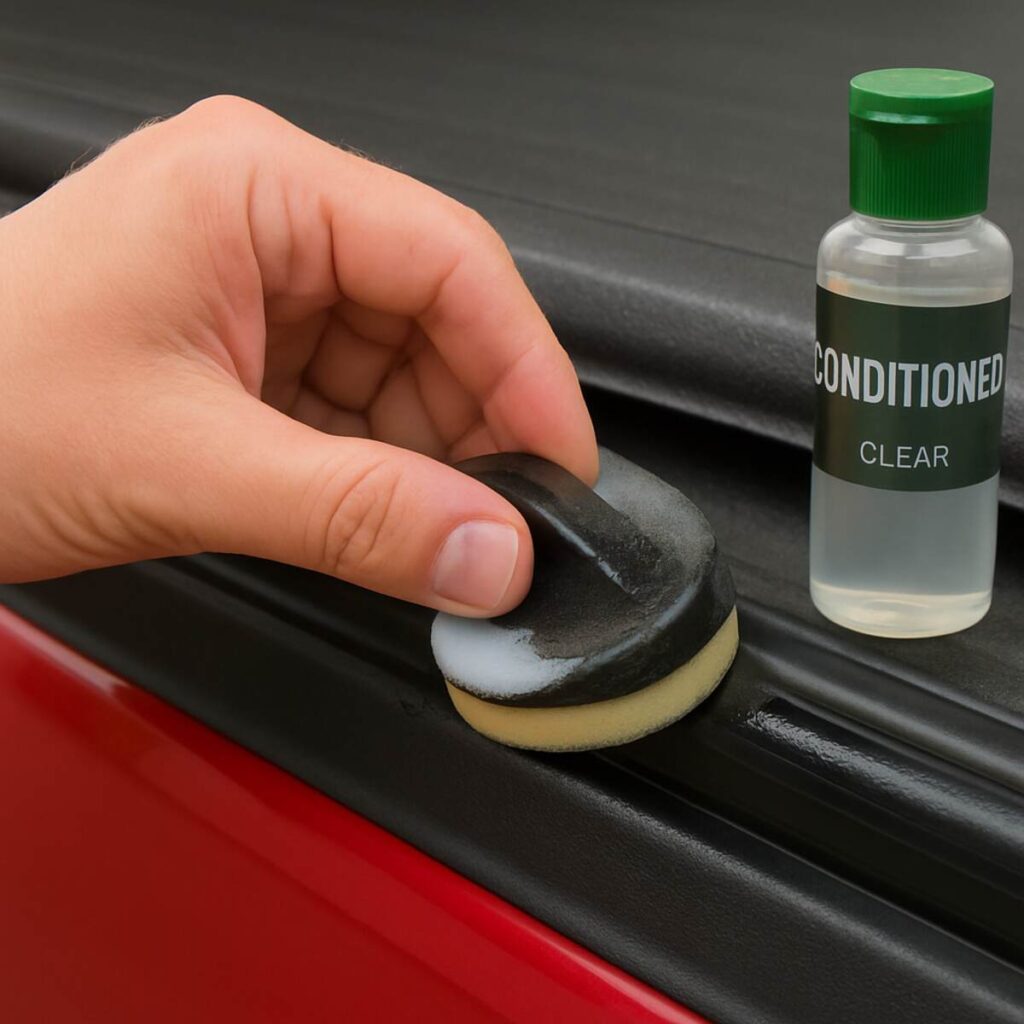
Baking sun and freezing temperatures eventually make this rubber brittle, a decaying process commonly called “dry rot.” Cracked rubber easily lets water soak your cargo. Rubbing a clear seal conditioner into these borders every few months keeps the material soft, flexible, and ready to repel the weather.
Wiping dirt off those rubber edges before conditioning is a vital step in preventing water leaks. Grit stops the material from achieving proper “seal compression,” ruining its tight, vacuum-like grip against the rails. Always inspect the highly vulnerable corner junctions while wiping down the perimeter.
Even with perfectly maintained rubber barriers, an aggressive storm might push minor droplets past the edges. When moisture inevitably sneaks through, your cover relies on a hidden backup plan: integrated drainage gutters.
Managing the Gutter System: Clearing Integrated Drainage Tubes
Parking under a tree provides great shade, but falling leaves and pine needles threaten your cover’s hidden water-management system. Just like a house, your cover relies on integrated drainage gutters built into the rails to catch stray droplets. This water gets channeled outside through hoses called exit ports. Clogged tubes are actually the number one cause of “mysterious” bed leaks.
Proper truck bed drainage maintenance is crucial for a dry cargo area. To quickly flush the system, follow these three steps:
- Locate the tube: Find where the plastic hose connects to the front corner of the side rail.
- Check for debris: Scoop out any visible dirt blocking the rail entrance.
- Pour water: Slowly pour a cup of low-pressure water down the track to clear hidden clogs.
Finally, verify the drainage tubes are still firmly connected to both the side rails and the truck’s exit holes. A loose hose will accidentally dump water directly onto your cargo instead of routing it outside. With the inside of your bed safely sealed against the rain, focus must shift to protecting the exterior panels from sun damage.
UV Defense: Preventing Sun Damage on Hard and Soft Panels
You know direct sunlight causes fading, but the damage goes deeper than cosmetics. UV exposure bakes the moisture out of vinyl and aluminum, turning black covers chalky gray and dangerously brittle over time. This is especially true for low-profile hard folding lids, whose broad, flat surfaces directly catch the harsh midday sun.
Stopping this degradation requires creating a sacrificial layer. Think of this treatment like applying heavy-duty sunscreen before a beach day. When intense solar rays hit your truck bed, they eat away at this invisible chemical barrier instead of breaking down the actual cover.
Choosing the right defense spray is critical for long-term care. Many cheap automotive dressings use harsh solvents that dry out vinyl, so always select petroleum-free protectants. These water-based, aerospace-grade sprays safely nourish modern cover materials without leaving a greasy, dust-catching residue behind.
Maintaining this shield takes only a few minutes. In high-heat climates, simply apply the protectant every 30 to 60 days to keep the exterior supple and strong. With the top surface safely shielded from the sun, it’s time to check your underside mounting hardware.
Tightening the Grip: Maintenance for No-Drill Clamp Systems
The no-drill clamp-on installation process is incredibly convenient, but every pothole sends vibrations directly through your vehicle. Over time, these daily bumps can rattle the mounting hardware loose, leading to annoying wind noise or, worse, a cover flying off on the highway.
Catching this issue early requires a simple maintenance routine. Treat your cover like your tires and check the clamp tension every 5,000 miles. A quick visual and physical inspection guarantees the hardware stays safely anchored, especially if you recently spent time measuring dimensions to get that perfect, tight fit.
When you do grab a wrench, resist the urge to crank down as hard as possible. Excessive force bends the metal brackets and can actually warp your truck’s side rails, creating permanent damage that ruins the cover’s weather seal and limits its lifespan.
Instead of brute force, use the reliable “snug-plus-a-quarter-turn” rule. Tighten the bolt just until it feels firm against the bracket, then give it one final quarter rotation for safety. With your foundation safely secured to the truck, focus on keeping your automatic latching system snappy.
Securing the Lock: Keeping Your Automatic Latching System Snappy
Hearing a crisp “click” when closing your cover brings immediate peace of mind. If that satisfying sound stops, your latch isn’t fully engaging the bed rail. This silent failure compromises the core advantage of hard vs soft truck bed security, leaving your gear completely vulnerable to thieves who can easily lift the unlatched panel.
Winter weather quickly exposes neglected automatic latching systems. The spring-loaded hardware inside the latches easily freezes or sticks when dirt and moisture accumulate over the seasons. Applying a dry silicone spray directly into the mechanism twice a year keeps those springs snappy, saving you from fighting a stuck latch during a freezing grocery run.
A properly adjusted release cable should always feel firm and responsive. Over time, this connecting wire can stretch, forcing you to pull awkwardly hard just to release the outer clips. Checking your cable tension and tightening any slack ensures you can always pop the cover open effortlessly from the side of the truck with one hand.
Once your locks and cables operate smoothly, you might feel tempted to rest large items directly on top of the closed sections. Before loading up those heavy hardware store supplies, however, you must understand the cover’s weight capacity limits.
Weight Capacity Limits: Protecting the Internal Panel Structure
It seems incredibly convenient to toss lightweight gear onto your closed cover when you are in a hurry. Because modern designs feature heavy-duty aluminum construction, many owners mistakenly treat them like a second cargo floor. Most hard quad-fold covers actually handle between 300 and 400 pounds of weight.
The way that weight rests on the panels makes all the difference. Manufacturers calculate limits using evenly spread, or “distributed,” weight, much like a heavy blanket of snow across the vehicle. Placing a massive 150-pound toolbox directly on one section creates “point weight,” focusing intense stress onto a single spot.
This focused pressure quickly overwhelms the structural capacity for folding lids, causing permanent damage. Concentrated heavy loads easily dent the metal skin and permanently warp the internal frame. Once that rigid skeleton bends, your weather seals will lift, leaving your gear completely exposed to the next rainstorm.
An undamaged frame guarantees your cover will fold smoothly and block out water for years. Storing heavy items securely inside the bed is the best way to prevent dreaded bending. A perfectly straight structure also ensures a flush alignment and a silent ride.
Low Profile Alignment: Ensuring a Flush and Silent Ride
Highway speeds shouldn’t sound like a whistling hurricane behind your cab. Over time, daily driving vibrations can cause even the best hard covers to shift slightly out of place. When a cover no longer sits flush—meaning perfectly level with your truck’s side walls—air easily sneaks underneath. Proper alignment prevents wind from getting under the panels, eliminating this annoying noise and protecting your hardware from unnecessary lifting.
A squared-up frame ensures that all four panels seal perfectly against the side rails, effectively blocking out rain and dirt. If your system looks slightly crooked, run through this four-point visual inspection checklist:
- Check for squareness at the bulkhead.
- Check gap width at the tailgate.
- Inspect rail height consistency.
- Verify panel centering.
Correcting a shifted cover is usually as simple as loosening two bolts and re-centering the main frame by hand. Maximizing bed access means keeping these sections folding smoothly without rubbing against the metal edges. Once your alignment is flush and tightened down securely, your gear is ready to face harsher winter weather.
Winter Survival: Caring for Your Quad-Fold in Freezing Temps
Winter weather changes how your vehicle behaves. As temperatures drop, materials naturally shrink and stiffen through a process called thermal contraction. This makes the rubber and metal parts less forgiving when you need to load gear in the freezing cold.
Road salt melts street ice but silently destroys metal accessories. While you already know salt ruins your truck’s undercarriage, winter highway spray also coats your quad fold tonneau cover. If ignored, this salt corrosion attacks the aluminum panels and hardware. A simple monthly trip through a touchless car wash easily rinses this chemical layer away before it does permanent damage.
Freezing rain creates another frustrating barrier when water pools in the folding joints. When this moisture freezes solid, it causes ice-locking, essentially gluing the panels together. Even the best hinge systems can crack if you forcefully pry them open. Gently clearing the surface ice first prevents expensive accidental damage.
Overnight frost often causes the rear weather stripping to freeze directly to your tailgate. Wiping a basic silicone-based protectant along these rubber edges stops them from sticking and tearing when opened. Keeping these seals healthy ensures a dry truck bed, ensuring full cargo utility when hauling large items.
Full Cargo Bed Utility: Protecting Panels While Hauling Large Items
Sometimes a weekend project means hauling a bulky refrigerator that simply won’t fit under a closed cover. This is where your quad-fold outshines a standard tri-fold. Instead of permanently blocking the front third of your space, a four-panel system folds up completely for entirely unobstructed bed use.
Pushing stacked panels vertically against your rear window feels risky, but built-in cab bumpers keep your vehicle safe. These dense rubber pads act as a cushion between the hard folded cover and your truck’s paint or glass. Checking that these bumpers are correctly positioned prevents expensive scratches caused by normal road vibrations.
Securing this upright stack correctly allows you to safely maintain full cargo bed utility with folding panels at highway speeds. Always lock the metal support rods firmly into place and pull the nylon straps tight, double-checking the buckle tension so the heavy panels cannot sway or slam backward in transit.
Once the heavy hauling ends and you drop the cover flat, you expect your gear to stay perfectly dry. Ensuring that watertight seal requires verifying the panels still press tightly against the metal.
Detecting Hidden Leaks: The ‘Darkness Test’ for Seal Integrity
Even with standard weather-stripping, verifying your bed stays dry requires ensuring the rubber actually touches the metal everywhere. The easiest way to spot tiny gaps is the flashlight test. Have someone shine a bright beam along the outer edges while you sit under the closed cover in the dark. Any light shining through means water can easily get in during a storm.
Finding these glowing leaks usually points directly to the bulkhead. This is simply the front wall of your truck bed sitting right behind the cab. Because vehicles have slight manufacturing variations and different plastic trims, new panels rarely sit perfectly flush against this specific edge right out of the box.
Fixing those bright spots is straightforward using EPDM foam. Think of this material as a heavy-duty, permanent weather seal that compresses easily to fill uneven spaces. Sticking an extra strip of this dense rubber onto the bulkhead bridges the gap, creating a tight barrier against rain that handles freezing winters and hot summers.
Achieving reliable weather-resistant seals keeps your valuable cargo completely dry on the road. Once the perimeter is secure, protecting the exterior panels depends entirely on their specific material construction.
Aluminum vs. Vinyl: Material-Specific Maintenance Tips
Knowing what material guards your gear is the first step, as different surfaces demand completely separate care routines. Whether you rely on hard vs soft truck bed security, keeping cargo safe long-term means understanding your cover’s specific maintenance needs. Treating every style identically eventually leads to premature, frustrating wear.
Soft-folding vinyl covers need constant defense against the sun to stop them from drying out like an old tire. Vinyl stays flexible thanks to chemical additives called plasticizers, which slowly bake out under intense heat. Applying UV-protectant sprays routinely restores these essential compounds, preventing the dark material from shrinking or cracking when you fold it open.
Upgrading to aluminum shifts your maintenance focus toward moving hardware and metal care. Aluminum panels grow slightly in summer heat and shrink during winter—a process called thermal expansion that puts heavy stress on joints. Lubricating those hinges ensures smooth folding, while applying automotive wax prevents the metal’s painted surface from chalking and fading through oxidation.
Routine cleaning extends the life of both styles significantly, but solid panels occasionally face physical impacts that simple wax cannot fix. When a dropped tool leaves an ugly mark, managing that damage requires specific touch-up techniques.
Scratch and Dent Repair: Touching Up Your Hard Folding Lid
An accidental lumber scrape across your metal cover happens to the best of us. When impacts chip the powder coating, quick action prevents major headaches. If left exposed, rainwater sneaks under the damage, causing the surrounding finish to slowly bubble and peel away like old wallpaper.
Fortunately, restoring a scratched hard lid doesn’t require a professional. You can easily hide small blemishes using a standard black automotive touch-up pen by following these straightforward steps:
- Clean the damaged area thoroughly with rubbing alcohol.
- Lightly sand the scratch if the metal edges feel jagged.
- Apply the paint pen carefully inside the scratch.
- Allow ample drying time according to the pen’s instructions.
- Buff the repaired spot gently with a microfiber cloth.
Because many covers feature a rougher finish, achieving a seamless look takes slightly more finesse. Instead of drawing a solid, flat line, use a “dab and blot” technique to mimic the bumpy, matte exterior so the new paint blends invisibly. With your cover looking pristine and weather-tight again, the flush surface also optimizes your truck’s aerodynamics.
Optimizing Fuel Economy: Why a Taut Cover Saves You Money
Gas prices aren’t dropping, making the impact of folding covers on fuel economy an excellent bonus for truck owners. An open truck bed acts like a giant parachute on the highway, catching the breeze and forcing your engine to work harder. A flush tonneau cover smooths out this airflow, reducing wind resistance so your vehicle glides forward with much less effort.
This smooth surface translates directly into real savings at the pump. Keeping your panels securely locked and sitting perfectly flat against the bed rails can improve your gas mileage by up to 10 percent.
However, worn weatherstripping or loose latches invite fast-moving air into tiny gaps along the truck bed. This creates panel lift, which physically pushes the sections upward from underneath. A cover that flaps or sits high creates wind resistance that lowers MPG, completely canceling out your hard-earned fuel savings.
Regularly checking seal tightness prevents this upward pulling and keeps your setup perfectly aerodynamic. Pressing down on the edges before a highway drive ensures everything is firmly anchored. Sometimes, though, you need the entire bed exposed for oversized cargo, meaning you must properly store your cover when removed.
The Proper Way to Store Your Cover When Removed
When figuring out how to transport a massive load, like a tall refrigerator, you might need to remove your quad fold tonneau cover completely. Taking it off is easy, but careless garage storage quickly causes damage.
Moisture trapped in the folded sections creates a perfect breeding ground for mildew. Before putting the hardware away, wipe down every surface and let the assembly dry completely to protect the rubber weather strips from destructive mold.
Proper positioning matters just as much as keeping the hardware clean. Always rest the assembly vertically on its side edge rather than laying it flat on the ground. Stacking heavy boxes or tools on a horizontal cover eventually causes panel warping, permanently bowing the rigid sections out of shape.
Rough concrete floors easily scratch metal hinges, so fold a thick moving blanket underneath the resting edge. This soft barrier prevents permanent pressure marks, which are deep, irreversible dents crushed into the weatherstripping by hard surfaces. Damaging those delicate seals in storage guarantees a drafty reinstallation, leaving you with the frustrating task of eliminating highway noise on your next road trip.
Eliminating Highway Noise: Troubleshooting Whistling and Flapping
Hearing a high-pitched whistle on the highway easily ruins a peaceful drive. This aero-noise happens when wind gets trapped under loose cover sections, usually originating right behind your cab. If the front panel isn’t pressed firmly against the truck’s metal, the rushing air creates rapid seal vibration, causing a loud, annoying flap.
To fix this, you just need a quick side rail tweak. Because your system features a simple no-drill clamp-on installation process, adjusting the overall height is incredibly straightforward. Just loosen those C-clamps you secured earlier and lower the metal rails slightly so they sit completely flush. Closing this tiny gap blocks the incoming wind.
Sometimes the noise culprit isn’t the wind at all, but rather the storage buckles. When left unfastened, these front straps bounce against the rigid lid at highway speeds, creating a steady tapping sound. Securing them flat stops the racket and protects your seals from plastic clip damage.
Once the cab area and side tracks are properly tightened, your drive should finally be quiet again. Yet, securing the front is only part of the equation. Your focus must also include the tailgate seal.
Tailgate Seal Maintenance: The Often-Forgotten Barrier
While securing the front is crucial, the back is where dirt actually sneaks in. The tailgate gap—the space where your truck’s back door closes against the bed—acts like a vacuum for road debris. Creating solid perimeter dust protection here transforms your bed into a truly clean space for daily gear.
Getting this barrier right fundamentally changes how your truck feels. When the rubber weatherstripping aligns perfectly, you will notice a firm resistance when shutting the tailgate, rather than a loose rattle. This snug fit ensures the panels remain tightly locked against potential thieves.
Rain and road grime inevitably target this vulnerable boundary. In fact, this rear edge is the most frequent entry point for blowing dust and moisture. Managing this rubber strip properly is the best method for keeping your luggage dry during sudden storms.
Routine upkeep requires just seconds but prevents permanent damage. Wiping this seal weekly with a damp cloth removes trapped grit, stopping it from scratching your tailgate paint like sandpaper. To ensure this protective shield hits the exact right spot, focus on re-checking the bed’s dimensions.
Measuring and Re-Checking Dimensions for a Perfect Seal
Driving over everyday bumps and potholes causes a natural bending in your vehicle’s frame called chassis flex. After thousands of miles, this constant twisting motion can cause the metal sides of your truck to push slightly outward. This gradual widening is known as bed rail spread, and it directly impacts how securely your cover fits.
Even a tiny shift in these walls compromises your weather barrier. Precision matters immensely for hard covers, which rely on exact tolerances to sit perfectly flush with the edges. Adjusting for this subtle movement requires measuring dimensions again so you can securely realign the clamps.
Checking this alignment takes only a standard tape measure and a simple technique called cross-measuring. Stretch your tape diagonally from the front-left corner to the rear-right corner, then repeat the process on the opposite corners. If those two diagonal numbers match exactly, your hardware is perfectly square.
Maintaining this true square shape is critical because it prevents uneven wear and tear on the folding hinges when you open the panels. With the clamps properly tightened and aligned, your next priority involves inspecting your third brake light.
Safety First: Inspecting Your Third Brake Light Visibility
Whenever you haul a tall piece of furniture, you likely flip your sections completely upright against the back window. Getting full utility with folding panels is incredibly convenient, but many drivers overlook a vital safety feature sitting right above their truck bed cover: the third brake light.
Federal safety standards require this Center High Mount Stop Lamp (CHMSL) to remain clearly visible to everyone traveling behind you. Because the stacked hardware sits so high against the truck cab, it can inadvertently block this critical warning signal if it is not positioned correctly.
A reliable tie-down strategy prevents this dangerous scenario. You must ensure the vertical panels are secured tightly with their built-in straps or struts so they do not bounce. If the hardware is left loose, highway wind can physically shift the panels backward, instantly hiding your brake light from trailing drivers and risking a rear-end collision.
Verifying this rear visibility is a key part of every multi-panel inspection before hitting the road. Once you understand exactly how your open setup behaves in the wind, it becomes much easier to evaluate routine maintenance needs.
Comparing Quad-Fold and Tri-Fold Maintenance Needs
Protecting your truck bed requires basic care, and adding an extra section changes that routine. A four-panel cover features greater seal length than a three-panel model because of the extra folding joint. Those added rubber weather strips mean you will spend about five extra minutes wiping away trapped dirt during normal washes.
The trade-off for this minor cleaning task is better hinge density. Having more folding joints spreads out the physical stress when driving with the bed only partially exposed. If you are hauling a tall appliance from the hardware store, the highway wind pressure is safely distributed across three hinges instead of just two.
This structural advantage also prevents the slow, frustrating problem of panel sagging. When comparing options, remember that a quad-fold relies on smaller individual sections. Because each piece spans less open space over the bed, the rigid material is much less likely to bow downward under heavy winter snow.
Long-term care for a quad fold tonneau cover is incredibly straightforward once you know what to watch. You simply need to keep the extra hinges free of grit to ensure smooth operation. To handle these basic chores quickly, it helps to gather specific items for a dedicated DIY maintenance toolbox.
The DIY Toolbox: Essential Supplies for Tonneau Maintenance
Spending just $50 on the right cleaning supplies can protect a $1,000 tonneau cover for years. Many truck owners mistakenly grab standard household cleaners, but multi-purpose sprays often contain harsh chemicals that quickly degrade rubber weather seals. Building a dedicated care kit ensures you always have the safest tools ready, making monthly maintenance a fast, simple task rather than a frustrating chore.
To keep your investment looking new and operating smoothly, gather these essentials into one easy-to-grab bucket:
- pH-neutral soap to clean dirt without stripping factory coatings
- A quality UV protectant spray to maintain the cover’s exterior
- Dry silicone spray to lubricate hinge systems without attracting dust
- Soft microfiber towels to prevent surface scratching during washes
- A 1/2-inch wrench to periodically check and tighten the mounting clamps
With these specific items stored together, you will never be tempted to use damaging household products out of sheer convenience. Once your dedicated toolbox is packed, you only need to follow a reliable seasonal maintenance calendar.
Your Long-Term Care Plan: The Seasonal Maintenance Calendar
Understanding exactly how this equipment works gives you total control over your daily hauling needs. To protect this investment, simply follow a basic seasonal rhythm starting with a thorough deep clean every spring.
When summer arrives, shift your focus to applying UV protectants to keep the panels from fading or cracking in the harsh sun. As the weather cools in the fall, perform a dedicated seal check along the rails to keep unexpected moisture out. Winter driving requires regular salt removal to stop corrosion from attacking the metal clamps under the rails.
Sticking to this routine ensures your gear remains secure. You will never have to guess how to load large cargo safely because your panels will always fold smoothly when properly maintained. A gentle wash with mild soap and an occasional hardware check is all you truly need to maintain any truck bed cover.
Following this guide ensures your quad fold tonneau cover remains weather-tight and secure for the life of your truck. Grab a bucket of soapy water this weekend and complete your first quick inspection to see just how easy it is.