


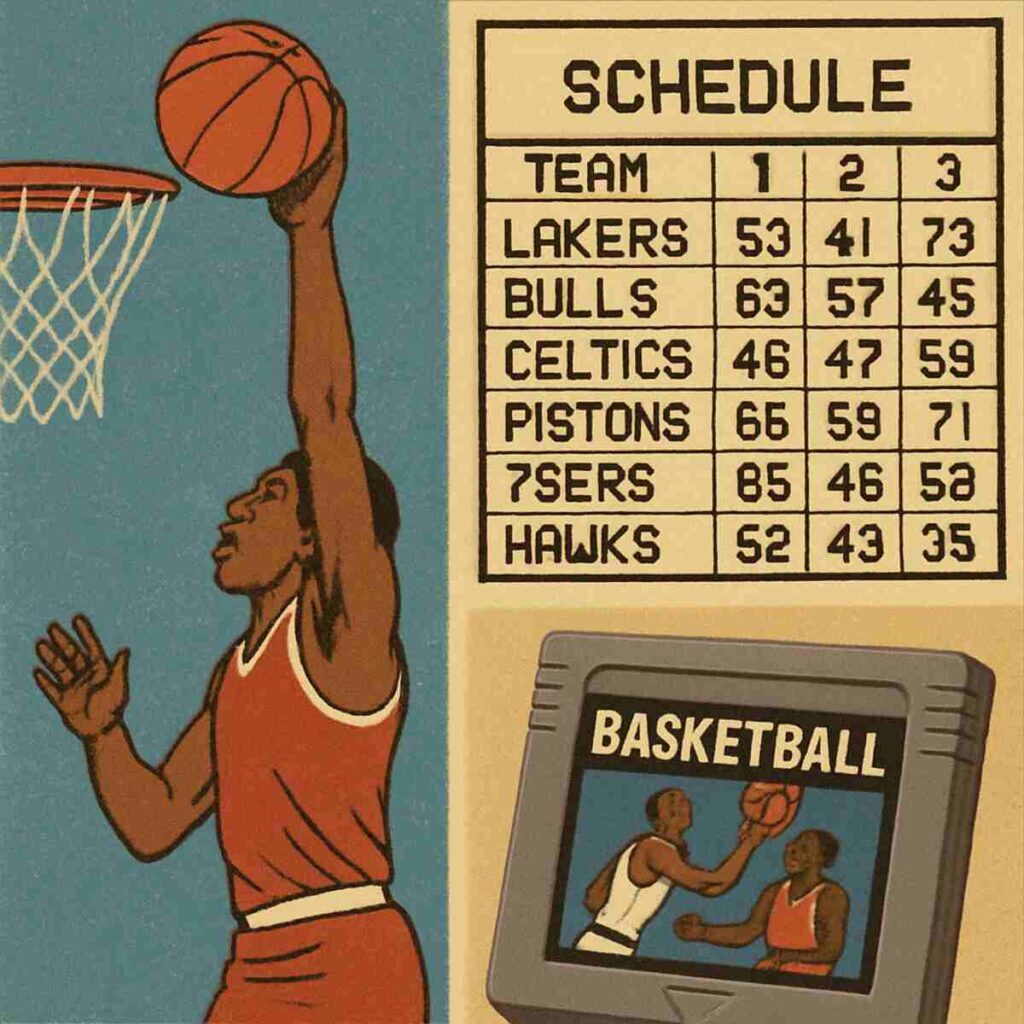
Whether you are watching a legendary athlete achieve an unbreakable scoring record on the basketball court, competing with your family in a basement rec room, or booting up a nostalgic 8-bit console, the number “72” holds a strangely magical significance in the world of sports and gaming. Find out the best info about jago89.
In professional basketball, achieving 72 points in a single game is a monumental feat, placing an athlete in the rarest echelon of sporting history. But this numerical phenomenon doesn’t stop at the arena doors. It extends into our homes through recreational equipment and deeply nostalgic video game media. From a legendary scoring streak, to the perfect dimensions of a multi-game table, all the way to the iconic, jam-packed retro cartridges of the 1990s, this article is your ultimate deep dive into the memorable moments and media associated with the number 72.
The Athletic Anomaly: Scoring 72 in One Game
When we talk about scoring 72 points in a single professional sports game, we are talking about an athletic anomaly. In the history of the NBA, the 70-point threshold has been reached only a handful of times by a select group of players.
Scoring exactly 72 points (or hovering right around that mark) requires a perfect storm of athletic endurance, exceptional shooting accuracy, and a game pace that allows for an extraordinarily high volume of possessions. It is a moment where a single player completely takes over, rendering the opposing defense obsolete.
What It Takes to Score 70+ Points
Achieving such a staggering offensive output requires specific conditions:
- Unmatched Stamina: The player must be on the floor for nearly the entire game, maintaining peak physical condition through all four quarters.
- High Usage Rate: The team’s offensive strategy must revolve entirely around this single player on that specific night.
- Efficient Shooting: You cannot reach 72 points by simply throwing up bad shots. It requires high percentages from the field, beyond the arc, and at the free-throw line.
- A Willing Opponent: Often, these high-scoring games occur in fast-paced matchups where the opposing team scores quickly, preventing a blowout and keeping the star player in the game.
Fans who witness these moments are seeing history. It is the type of performance that kids immediately try to replicate in their driveways or, more commonly, in their living rooms, on physical game tables and video game consoles.
Bringing the Arena Home: The Physical Rec Room
For those of us who aren’t breaking professional scoring records, the thrill of competition happens at home. Building the ultimate recreation room often involves finding the perfect balance between space and variety. This is where the 2 in one game table 72 inch becomes the MVP of the household.
Why 72 Inches is the Sweet Spot
When shopping for combo game tables—usually combining air hockey, billiards, ping pong, or foosball—size is everything. A standard full-sized billiards table is usually 8 or 9 feet long (96 to 108 inches), which requires a massive dedicated room. Conversely, a 48-inch table often feels too small, like a child’s toy.
A 72-inch (6-foot) table provides the perfect middle ground.
- Realistic Gameplay: At six feet long, there is enough surface area to require genuine skill, bank shots, and strategic play.
- Space Efficiency: It fits comfortably in most standard basements or playrooms while leaving enough clearance around the edges for players to maneuver.
- Multi-Functionality: The “2-in-1” or “3-in-1” designs usually feature a rotating top or conversion boards. You can easily switch from a fast-paced game of air hockey to a relaxed game of pool in seconds.
The Digital Transition: The Magic of the “72 in One Game”
While physical game tables are fantastic, nothing captures the imagination quite like the vast worlds contained within video games. If you grew up in the late 1980s or 1990s, the thrill of getting a new video game was unmatched. But what if you could get not just one game, but 72?
Enter the legendary 72 in one game multi-cartridge.
For retro gaming enthusiasts, these bright yellow or grey cartridges hold a profound sense of mystery and nostalgia. Found at flea markets, mall kiosks, and imported from overseas, these multi-game cartridges promised a lifetime of entertainment on a single piece of plastic.
The Origins of the Multi-Cart
To understand how a single cartridge could hold so many games, we have to look at the history of famiclone gaming systems. In the late 80s and early 90s, Nintendo dominated the North American and Japanese markets with the NES (Nintendo Entertainment System) and Famicom. However, due to high pricing and strict regional licensing, massive global markets—including Eastern Europe, South America, and parts of Asia—were left without official distribution.
Nature abhors a vacuum, and so does the free market. Electronics manufacturers reverse-engineered Nintendo’s hardware, creating “Famiclones” (clones of the Famicom). Consoles like the Dendy in Russia, the Pegasus in Poland, and the Micro Genius in Taiwan became the de facto standard for millions of children.
Because there was no official software distribution for these clones, pirate developers stepped in, compiling dozens of games onto single, massive ROM chips. This gave birth to the iconic multi-cart.
Dissecting the Cartridge: What Was Inside?
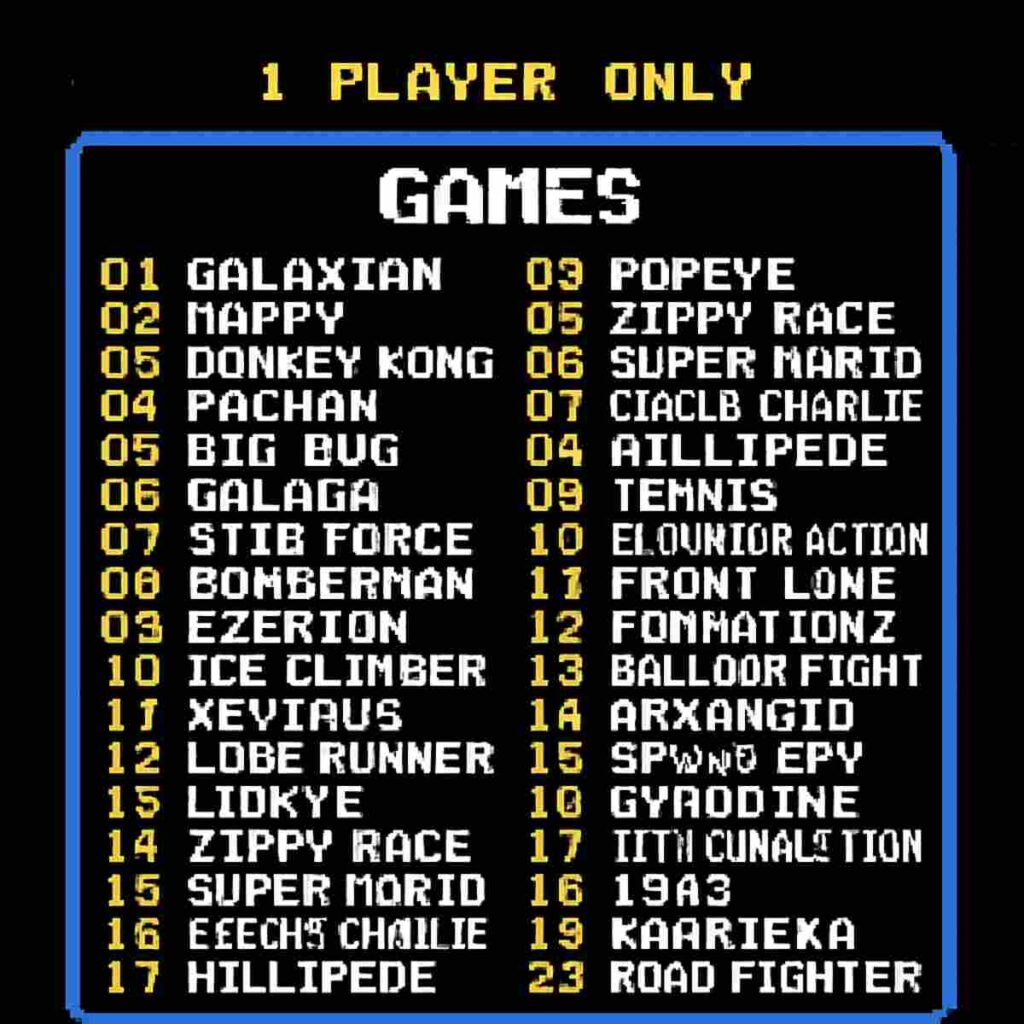
When a kid plugged a 72-in-one game cartridge into their console, they were greeted by a stark, text-based menu, often accompanied by a repetitive, high-pitched chiptune track. But what were they actually playing?
Pirated vs Licensed Video Game Collections
It is crucial to understand the difference between pirated vs licensed video game collections.
- Licensed Collections: These were rare during the 8-bit era. A licensed collection might include a 3-in-1 cartridge officially released by Nintendo (like Super Mario Bros. / Duck Hunt / World Class Track Meet). These were highly polished and completely legal.
- Pirated Multi-Carts: These were unauthorized compilations. Bootleggers would strip the copyright screens, alter title graphics (sometimes turning Super Mario into a bizarre alien), and cram them all onto one board.
The Classic 8-Bit Game List Comparison
If you do a classic 8-bit game list comparison of standard multi-carts from the 90s, you’ll notice overlapping patterns. Because memory space was incredibly limited, bootleggers couldn’t fit 72 massive, sprawling RPGs onto a single cartridge. Instead, they relied on early, low-memory arcade ports.
The most popular 8-bit titles included on these cartridges generally featured:
- Platformers: Hacks of Super Mario Bros. (often starting you on random levels).
- Run and Gun: Contra or Super C (frequently hacked to automatically give the player 30 lives).
- Puzzle Games: Early versions of Tetris, Dr Mario, or Nuts & Milk.
- Arcade Ports: Galaga, Pac-Man, Donkey Kong, Mappy, and Ice Climber.
- Sports: Soccer, Tennis, and Track & Field (perfectly tying back to our love of athletic competition!).
The “Repeat” Deception
It is worth noting that while a cartridge might boast “72 in 1” or even “9999 in 1”, there were rarely that many unique games. Bootleggers frequently padded the list. Game #1 might be Super Mario Bros., while Game #72 might simply be Super Mario Bros. starting on World 8-1 with a different color palette. Despite the deception, having 15 to 20 unique, solid titles on a single cartridge was still an incredible value for a kid in 1993.
Hardware Realities: Performance and Limitations
Running 72 distinct games off a single piece of hardware designed in 1983 requires some technological gymnastics. The engineering behind these multi-carts is both fascinating and incredibly flawed.
Retro Console Hardware Limitations
The original NES and Famicom consoles had virtually no onboard storage and very limited RAM. Games relied on “mappers” (Memory Management Controllers) built directly into the game cartridges to page different parts of the game’s code into the console’s memory.
A standard game used a specific mapper. But a multi-cart containing games from five different developers required a custom, bootleg mapper chip that could trick the console into switching between different game banks. Because of these retro console hardware limitations, complex games like Castlevania III (which used highly advanced, proprietary mappers) could never be included on cheap multi-carts.
Saving Progress on Multi-Game Boards
One of the most frustrating aspects of early multi-carts was the battery backup issue. Epic games like The Legend of Zelda or Final Fantasy required SRAM (Static RAM) powered by a small watch battery inside the cartridge to save your progress.
Saving progress on multi-game boards was virtually non-existent. Bootleggers were obsessed with cutting costs. Adding a battery, an SRAM chip, and writing a menu interface capable of managing multiple save files for different games was far too expensive and technically complex. Therefore, multi-carts were almost exclusively populated with arcade-style games that could be beaten in a single sitting and required no save states.
Vintage NES Multicart Compatibility
If you find a vintage Famiclone multi-cart today, getting it to run on a genuine, unmodified American or European Nintendo Entertainment System can be a headache due to compatibility issues with vintage NES multicarts.
- The 10NES Lockout Chip: Nintendo installed a proprietary security chip in Western consoles to prevent unauthorized (and pirated) games from playing. Many vintage multi-carts lack the circuitry to bypass this chip.
- Pin Differences: Famicom (Japanese) cartridges have 60 pins, while Western NES cartridges have 72 pins. To play an imported 60-pin multi-cart, you need a 72-to-60 pin adapter.
- Region Differences (NTSC vs PAL): Playing a multi-cart designed for a European PAL console on an American NTSC console will result in games running at the wrong speed, audio glitches, and graphical tearing.
When Things Go Wrong: Maintenance and Troubleshooting
Retro gaming hardware is now pushing 40 years old. If you manage to track down a vintage multi-cart or pull your old console out of the attic, you are almost guaranteed to run into technical issues.
Troubleshooting Grey Screen on Vintage Consoles
Every retro gamer knows the dreaded blinking red light and the accompanying flashing grey (or colored) screen. This happens when the console cannot establish a clean connection with the cartridge, causing the lockout chip to endlessly reset the system.
Troubleshooting grey screen on vintage consoles usually comes down to the system’s 72-pin connector. The original front-loading NES required players to push the cartridge in and press it down. Over decades, these internal pins bend out of shape and become oxidized.
- The Fix: You can often fix this by opening the console and using a small pick to carefully bend the pins back into their original, tight position. Alternatively, replacing the 72-pin connector entirely is a cheap and easy repair that requires only a Phillips-head screwdriver.
How to Fix Glitchy Multi-Game Cartridges
If your console works fine with other games but your multi-cart is displaying scrambled graphics or freezing on the menu, the issue lies with the cartridge itself. Knowing how to fix glitchy multi-game cartridges is an essential skill for any retro collector.
Multi-carts are notoriously cheaply made. Their PCBs (Printed Circuit Boards) are thin, and their contacts tarnish quickly.
- Check for Cold Solder Joints: Because they were mass-produced in unregulated factories, the solder holding the ROM chips to the board often cracks over time. If you know how to solder, “reflowing” the pins on the main chips can instantly bring a dead multi-cart back to life.
- Check the Voltage: Bootleg carts often use 3.3v chips on a system designed for 5v. Over many years, this voltage mismatch can degrade the components. Unfortunately, if a ROM chip is burnt out, the cartridge is permanently dead.
NES Game Cartridge Pins Cleaning Guide
Never blow into your cartridges! The moisture from your breath causes the copper pins to rust and oxidize, making the problem permanently worse. Instead, follow this definitive nes game cartridge pins cleaning guide:
- Step 1: Open the Cartridge. Use a 3.8mm gamebit screwdriver (or a standard small Phillips if it’s a bootleg) to open the plastic shell.
- Step 2: The Eraser Method. Take a standard white polymer pencil eraser and rub it vigorously across the gold contact pins on both sides of the board. This acts as a mild abrasive, safely removing decades of grime without scratching the metal.
- Step 3: Isopropyl Alcohol. Dip a cotton swab (Q-tip) in 91% or 99% Isopropyl Alcohol. Scrub the pins thoroughly to remove the eraser shavings and leftover oils. Never use water or rubbing alcohol with less than 90% alcohol, as they contain too much water.
- Step 4: Dry and Reassemble. Use the dry end of the cotton swab to remove excess alcohol, let it air-dry for 2 minutes, and put the shell back together. Your game should now boot perfectly on the first try.
The Modern Collector: Emulators, Value, and Legality
As retro gaming has exploded in popularity, the way we view, value, and play these multi-game collections has evolved dramatically.
Emulator vs Physical Multicart Performance
Today, many gamers prefer to play classic titles via software emulators on their PCs, Raspberry Pis, or handhelds. When comparing emulator vs physical multicart performance, there are distinct trade-offs.
- Emulators: Offer perfect pixel scaling, save states (allowing you to save progress anywhere), and support for thousands of games. However, they can suffer from minor input lag, which can be detrimental to precision in 8-bit platformers.
- Physical Hardware: Playing a real multi-cart on an original console connected to a CRT (Cathode Ray Tube) television offers zero input lag and an authentic visual experience. However, you are subjected to the original hardware limitations, graphical flickering, and hardware failures.
Evaluating Rare Game Cartridge Value
Believe it or not, some of these cheap, illegal multi-carts from the 90s are now highly sought-after collector’s items. Evaluating the value of rare game cartridges in the bootleg scene is a strange sub-hobby.
While a standard “150 in 1” cart from AliExpress might only be worth $10, vintage oddities hold real value. For example, the infamous Action 52 (an unlicensed, domestic multi-cart featuring 52 terrible original games) can sell for hundreds of dollars due to its sheer notoriety and rarity. Similarly, vintage Famiclone carts featuring rare regional hacks (like Somari, a bootleg port of Sonic the Hedgehog starring Mario) are highly prized by niche collectors.
Illegal Bootleg Cartridge Risks
If you are buying modern multi-carts online today, you must be aware of the risks of illegal bootleg cartridges.
- Console Damage: Modern cheap reproduction carts often lack proper voltage step-down regulators. Plugging these into your vintage console can send incorrect voltage to your system’s CPU, slowly frying your beloved retro hardware over time.
- Poor Build Quality: Modern bootleg shells are often slightly too thick, forcing you to jam them into your console, physically damaging the pin connector.
- Legal Gray Areas: Selling and importing cartridges packed with hundreds of copyrighted ROMs remains heavily illegal, and shipments are occasionally seized by customs.
Legal Alternatives to Retro Multicarts
Fortunately, you no longer have to rely on shady bootlegs to get your multi-game fix. The gaming industry has recognized the demand for massive compilations, leading to fantastic legal alternatives to retro multicarts.
- Mini Consoles: The NES Classic Edition and SNES Classic Edition were essentially official, highly polished “multi-carts” built into miniature hardware.
- Digital Subscriptions: Services like Nintendo Switch Online offer massive, ever-growing libraries of 8-bit and 16-bit games, with added features such as online multiplayer and cloud saves.
- The Evercade: This is a modern physical retro console that uses fully licensed, curated multi-game cartridges. It provides the tactile joy of inserting a physical cart without the ethical or hardware risks of piracy.
The Best Retro Gaming Compilations
If you want to purchase a massive library of games officially, modern consoles have you covered. The best retro gaming compilations available today are marvels of preservation.
- Atari 50: The Anniversary Celebration serves as an interactive museum, featuring over 100 games alongside archival footage.
- The Teenage Mutant Ninja Turtles: The Cowabunga Collection gathers 13 classic games with extensive behind-the-scenes design documents.
- Mega Man Legacy Collection offers perfect emulations of the original grueling 8-bit classics.
These collections provide the incredible value that the old bootleg multi-carts promised, but with high-quality emulation, historical context, and respect for the original developers.
The Future in Your Pocket: The “72 Game in One App”
The spirit of the massive game compilation hasn’t just survived; it has migrated to the device we carry with us every day. A quick search of the iOS or Google Play store will reveal dozens of variations of a 72 game in one app.
These mobile applications capture the exact same casual appeal as a rec room game table or an old NES multi-cart. They are typically packed with bite-sized, arcade-style diversions—sudoku, match-3 puzzles, simple racing games, and digital versions of air hockey or pool.
While they lack the tactile feedback of a D-pad or an air hockey mallet, they serve the identical psychological purpose: providing an absolute abundance of choice and instantly accessible entertainment, no matter where you are.
Conclusion: The Enduring Legacy of 72
From the blinding lights of the professional sports arena to the comforting hum of a CRT television in a dark basement, the concept of a “72” performance or package represents going above and beyond the standard limits.
We marvel at the athlete who can pour 72 points into a single game, defying the limits of human endurance and opposing defenses. We gather our families around the 2 in one game table 72 inch, realizing it is the perfect dimension for fostering physical competition and lifelong memories. And for retro gaming enthusiasts, the iconic 72 in one game cartridge remains a powerful symbol of childhood wonder—an artifact from an era where a single piece of plastic held an entire universe of adventures.
Whether you are hunting down legal alternatives to retro multicarts, meticulously cleaning cartridge pins to resurrect an 8-bit classic, or just enjoying a modern 72 game in one app on your commute, you are participating in a long, proud tradition of maximizing entertainment. The methods of play will continue to evolve, from physical hardwood to digital apps, but the thrill of having a near-endless variety of games at your fingertips will never fade.